CRETAN
OLIVES

OUR PRODUCERS
The Sitian Union of Agricultural Co-operatives is no small endeavor. It unified producers across the whole region and reflects their common desire to produce olive oil in the most modern facilities. Of the 41 primary co-operatives there are 8000 farmers, amongst which are found those who have been farming from “grandfather to grandfather”, those who have a deep affinity with the land, those who have heard the call and returned.
OLIVE OIL
Extra virgin olive oil is the defining mark of the Mediterranean diet and boasts superior quality to its competitors. Much has been written regarding its nutritional value and health benefits. High in vitamins E, A and K and beneficial fatty acids. Its key health benefits however, are its antioxidant and anti-inflammatory properties. Medical studies also show that extra virgin olive oil, helps prevent cardiovascular disease and lower blood pressure. No wonder top chefs never tire their raving about it.
Around the world, from Northern Europe and the Americas to Southeast Asia, China, Korea and Japan, the increase in demand shows that households are gradually discovering the spectacular taste “boom” with the addition of Extra Virgin Olive Oil. After all, Mediterranean diet, among the healthiest in the world with millions of “believers”, has Extra Virgin Olive Oil at its core.


SITIA - THE PERFECT OLIVE MICROCLIMATE
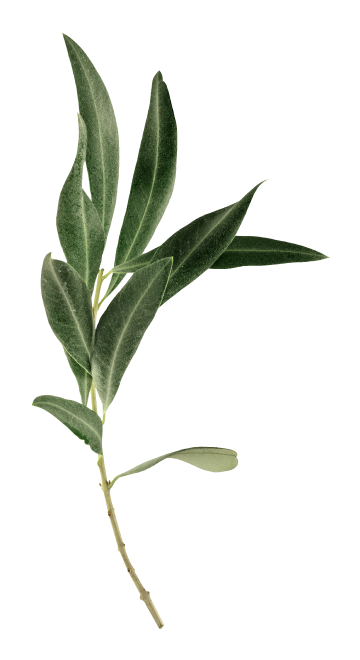
Of the 190,000 acres of arable land in Sitia, 140,000, i.e. about 75%, are olive cultivation with 3,000,000 olive trees, exclusively of the variety “Koroniki” that produce an average of 10,000 tons of Extra Virgin Olive Oil per year, of excellent quality, famous throughout the world.
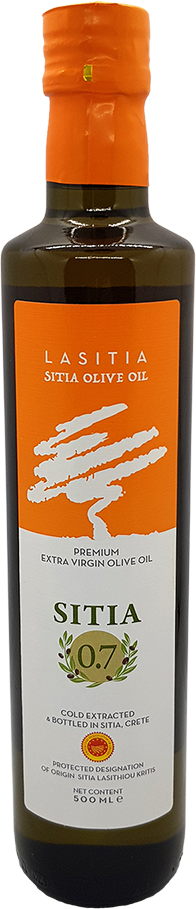
P. D. O. SITIA LASITHIOU KRITIS
The worldwide registered “Protected Designation of Origin Sitia Lassithiou Kritis”, since 1993 describes the unique properties of olive oil produced by the region that until today remains untouched by polluting activities. The microclimate of Sitia is characterized by high sunshine, mild winters special composition and morphology of the soil and wet sea wind. The morphology of the soil includes many mountainous and semi-mountainous areas with large gradients and good soil drainage. Factors that directly affect the cultivation and production process and that offer olive oil of Koroniki variety, all those elements that make it unique in its kind and give it special characteristics. An excellent fruity and mildly spicy unique olive oil with a long aftertaste, different and distinct from other regions of Greece.
“Sitia Lasithiou Kritis” olive oil has special quality and organoleptic characteristics, which are the elements that built its reputation all over the world. These characteristics are the result of a combination of factors, such as the cultivated variety, the special soil and climate conditions, but also the human factor with the long tradition and dedication to cultivation. The peculiarity of “Sitia, Lasithi, Crete” olive oil lies in the fact that: It is produced exclusively from olives of the Koroneiki variety. It has low oxidation, a minimum fruitiness value of 3 and a maximum bitterness and pungency value of less than 5, i.e. values that do not exceed more than 2 degrees the median fruitiness. A fact that gives the olive oil “Sitia Lasithiou Crete” a balanced character.
Geographical and climatic characteristics of the Sitia Geopark
The area of Sitia province is 786 sq km. The terrain is mainly semi-mountainous (altitude 300-1 000 m, with small plateaus), with less than 20 % lowland (< 300 m) and a few mountainous areas (1 000-1 500 m).
The area of Sitia is one of the most important and environmentally special areas of Crete. Its geographical location at the eastern tip of the island that allowed the exchange of species from Asia Minor, combined with the intensely dry climate prevailing in the region, created a mosaic of habitats and ecosystems, some of which, such as the palm forest of Vai, are unique to the Mediterranean region. Rare species of flora and fauna unique to Crete will be encountered by the visitor throughout the area that has been designated as a “geopark”. The area of Sitia has lower rainfall, stronger winds and higher temperatures than the rest of Crete.
The average annual temperature on the north coast is 18.6°C and on the south is at least 1°C higher, with an annual temperature range of 17°C. In the semi-mountainous livestock areas with an altitude of ~ 600 m, an average annual temperature of ~ 16.5°C is expected, with a temperature range of about 20°C. For the same altitude in Western Crete, the average temperatures are 1-1.5°C lower.
NW winds prevail, with greater intensity in the months of July-August, when they prevent the occurrence of very high temperatures during the midday hours. In the winter months and spring, they occasionally blow southerly winds, which make the climate milder-warmer.
Sunshine is particularly high, from 2,700 hours per year on the north side to over 3,000 hours in the south (maximum in Greece). The special relief and the climate also create a special flora. At an altitude of up to 600 m there is extensive cultivation of olives (Olea Europea) and up to 1,000 m and vines (Vitis vinifera).
More than 700 species of plants have been reported to date in the area of Sitia, while throughout Crete, in more than ten times the area, 1,800 species are reported. Brushwood is the dominant type of vegetation in non-cultivated areas, with large areas covered by shrubby plants, such as the thorny burnet (Sarcopoterium spinosum), the sea urchin (Thorny Broom), the thyme (Thymus capitatus), the sage (salvia fruticosa & salvia pomifera), the Cretan Ebony (Ebenus cretica.
History
The prosperity of Crete has been interwoven with olives since the first European civilization began to emerge with the ancient Minoans. They were the first to discover its riches, using it for food and light and they have never lost their value since. In the greater Sitia area, ancient pots and amphora were found full of olives and laid out as an offering to the gods – an offering that no man dare present to the divine unless it was the most valuable and pure he had.


In an inscription containing a decree of the Praisians, the Sitaitas are mentioned, so some linguists believe that there may have been a different city with the name Sitaia that was changed to Sitia later. The name Sitia clearly comes from the ancient city of Iteia. Scholars and linguists who have dealt with the etymology of the name report that it probably comes from the genitive of the name Iteia (of Iteia) or from “in Iteia”. What is certain is that the evidence found in the place of today’s Sitia does not confirm the existence of a fully organized city at this point. The archaeological dig has brought to light a number of findings in the area of Petras, with public and private buildings.
During the Byzantine times, the economy of the island was mainly agricultural and pastoral. However, the number of early Christian churches, such as those of Itanos, is at the same time a testimony of relative wealth and stability. From the middle of the 7th century AD the Arab threat began to emerge and the Cretan coasts often suffered from the raids of the Arab fleet. During the settlement of the Arabs in Crete, an Arab emirate was founded, which based its survival on piracy and the economic oppression of the local population. With the recovery of Crete by Nikephoros Phocas (961 AD) and its reconnection with the body of the Byzantine Empire, a new period in its history begins.
During the Venetian period, Sitia became part of the Venetian Regno di Candia and received the designation “maximum statum et lumen ejiusdem insulae” (which means “maximum station and light of the island”). The Venetians, as they used to, built various castles and fortresses in the city, of which the fortress of Kazarma, which dominates over Sitia, survives today.
Sitia actively participated in revolts against the conquerors. In 1362 the Venetian colonists of the area revolted and proclaimed Crete “Autonomous Republic of Agios Titus”. In 1651 its inhabitants abandoned it after it had fallen into complete decline, and moved to the settlement of Liopetros. The Venetians, seeing that the Turks were threatening the area, destroyed the fortress of Kazarma so that it would not fall into their hands, leaving only the tower and some smaller storage areas. Sitia was not settled for about two centuries, until the middle of the 19th century.
Sitia was rebuilt in 1870, by a progressive Turk, Avni Pasha, for whose sake the city was named Avnie. The Greeks of the area, however, continued to call it Sitia, maintaining its historical name. Hussein Avni Pasha decided to buy the area of old Sitia and move the capital of his province there. He also made the street plan of the area, and built many public and private buildings. One of the first buildings built in the area was the eparch, which is not preserved today. In the 1881 census, Sitia had about 570 inhabitants, while in 1928 it had 2100. In 1911 important works were carried out in the area, which was supplied with water from the springs of the village of Zou. Since then, Sitia has become one of the important centers of Eastern Crete. In addition to the economic prosperity of the city, which is mainly based on the distribution of the province’s large production of oil, raisins and vegetables, its cultural recovery is also important, which is based on its heavy cultural heritage.
Sitia was occupied in 1941 by Italians, who remained in the city until their withdrawal and the arrival of the German occupation army. During the occupation, the people of Sitia organized resistance against the Germans. The monks in the Toplou Monastery also took part in the resistance, which was in danger of being completely destroyed by the Nazis. In addition to an excellent library, it also has an important folklore museum, a work of the Progressive Association, “Vitsentzos Kornaros”, a branch of the Touring Club, the Lyceum Club of Greek Women, etc. “Kazarma”, the Medieval Fortress of the city, has been restored and properly configured so that it is the most ideal décor for the staging of historical plays, especially the repertoire of the Medieval Cretan School. Sitia is the seat of almost all Public Services and has road and ferry communication with the various centers of the island and the Aegean islands.

